
Back to BlogQuality Control

Understanding AQL for Nepal Imports
December 15, 2024 Nepal Trade Solutions
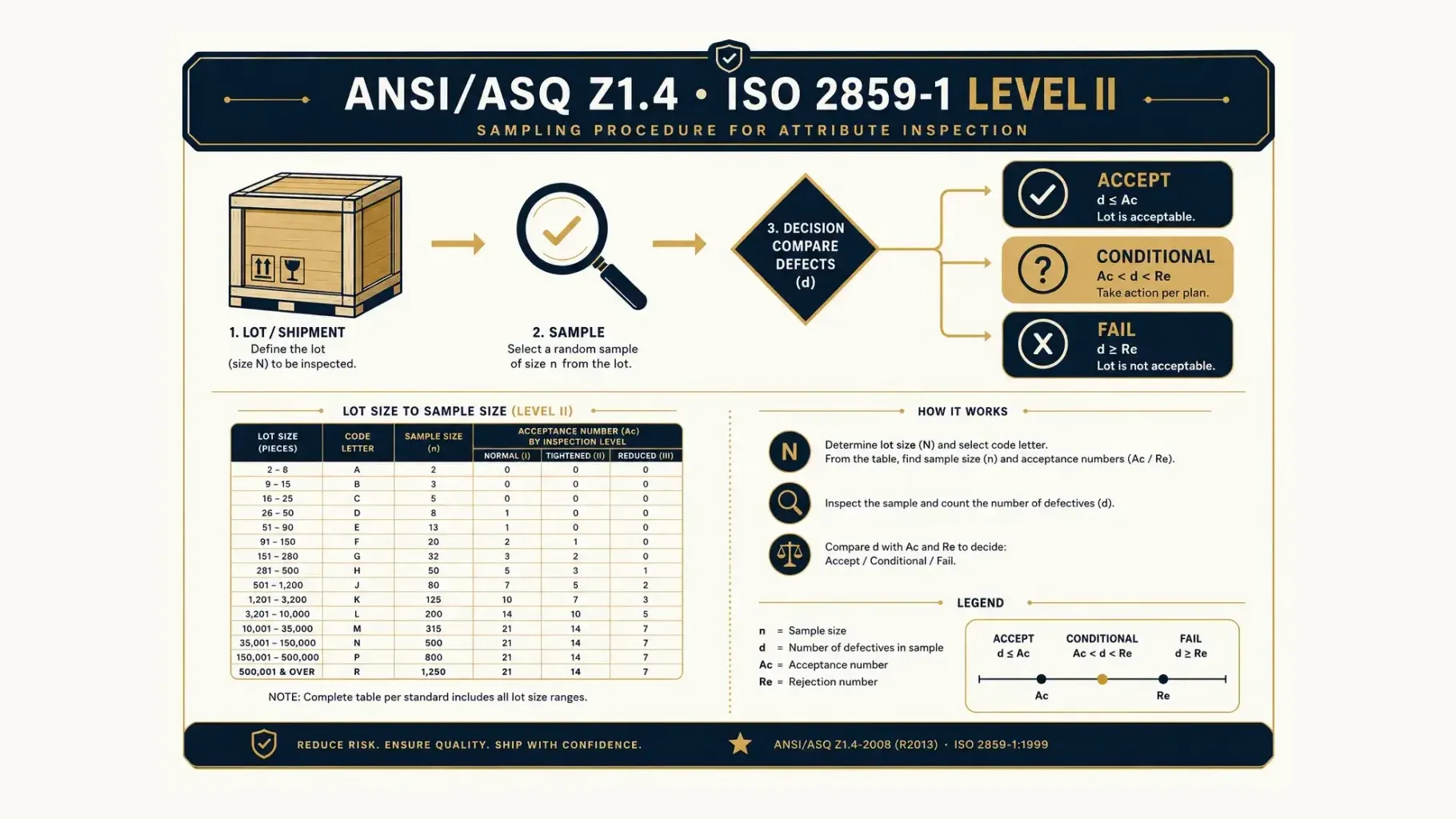
AQL sampling and inspection flow chart for Nepal imports

AQL stands for Acceptable Quality Level. It is the international standard for product inspection sampling, defined under ANSI/ASQ Z1.4 and ISO 2859. If you are importing from Nepal, understanding AQL matters because it decides how many units get inspected, how defects are classified, and whether your order passes or fails. Here is what you need to know.

Instead of inspecting every single unit, which is impractical when you have 500 or 5,000 pieces, AQL picks a statistically valid sample size based on your total order. A bigger order means a bigger sample, but the percentage inspected actually drops as the order grows. Our PSI system applies these tables automatically based on your shipment size.

AQL classifies defects into three categories. Critical defects are safety hazards or regulatory violations with zero tolerance. Major defects affect functionality, appearance, or marketability, and your agreed AQL limit applies to them. Minor defects are small imperfections that do not affect use but deviate from specifications, and a separate, more lenient AQL limit applies.

For most consumer goods imported from Nepal, we recommend an AQL of 2.5 for major defects. This means up to 2.5% of the sampled units may have major defects and the order still passes. For premium or high-value products, we recommend AQL 1.5, which is stricter. For commodity products where minor imperfections are acceptable, AQL 4.0 may be appropriate.

If the number of defective units in the sample exceeds your AQL limit, the entire order is classified as FAIL. At that point you have several options: reject the order entirely, request a 100% sorting inspection where every unit is examined, negotiate a discounted price with the supplier, or allow corrective action followed by a re-inspection at a reduced rate.

AQL is not about perfection. AQL 2.5 does not mean 2.5% of your order is guaranteed defective. It means the sampling plan provides statistical confidence that the defect rate does not exceed 2.5%. Most orders that pass AQL 2.5 actually have far fewer defects in practice. The standard exists to balance quality assurance with practical inspection costs.

Nepal Trade Solutions applies ANSI/ASQ Z1.4 AQL standards on every pre-shipment inspection we perform. Our inspectors are trained in correct sampling procedures, defect classification, and reporting. We recommend the appropriate AQL level based on your product category, order value, and quality requirements. To see how AQL fits into the wider quality picture, read our guide to quality control standards in Nepal.

Tags

AQL Nepal importsacceptable quality levelinspection standards NepalAQL samplingquality control Nepal

Share this article

Skip to content
Back to BlogQuality Control

Understanding AQL for Nepal Imports

December 15, 2024 Nepal Trade Solutions
AQL sampling and inspection flow chart for Nepal imports

AQL stands for Acceptable Quality Level. It is the international standard for product inspection sampling, defined under ANSI/ASQ Z1.4 and ISO 2859. If you are importing from Nepal, understanding AQL matters because it decides how many units get inspected, how defects are classified, and whether your order passes or fails. Here is what you need to know.

Instead of inspecting every single unit, which is impractical when you have 500 or 5,000 pieces, AQL picks a statistically valid sample size based on your total order. A bigger order means a bigger sample, but the percentage inspected actually drops as the order grows. Our PSI system applies these tables automatically based on your shipment size.

AQL classifies defects into three categories. Critical defects are safety hazards or regulatory violations with zero tolerance. Major defects affect functionality, appearance, or marketability, and your agreed AQL limit applies to them. Minor defects are small imperfections that do not affect use but deviate from specifications, and a separate, more lenient AQL limit applies.

For most consumer goods imported from Nepal, we recommend an AQL of 2.5 for major defects. This means up to 2.5% of the sampled units may have major defects and the order still passes. For premium or high-value products, we recommend AQL 1.5, which is stricter. For commodity products where minor imperfections are acceptable, AQL 4.0 may be appropriate.

If the number of defective units in the sample exceeds your AQL limit, the entire order is classified as FAIL. At that point you have several options: reject the order entirely, request a 100% sorting inspection where every unit is examined, negotiate a discounted price with the supplier, or allow corrective action followed by a re-inspection at a reduced rate.

AQL is not about perfection. AQL 2.5 does not mean 2.5% of your order is guaranteed defective. It means the sampling plan provides statistical confidence that the defect rate does not exceed 2.5%. Most orders that pass AQL 2.5 actually have far fewer defects in practice. The standard exists to balance quality assurance with practical inspection costs.

Nepal Trade Solutions applies ANSI/ASQ Z1.4 AQL standards on every pre-shipment inspection we perform. Our inspectors are trained in correct sampling procedures, defect classification, and reporting. We recommend the appropriate AQL level based on your product category, order value, and quality requirements. To see how AQL fits into the wider quality picture, read our guide to quality control standards in Nepal.

Tags

AQL Nepal importsacceptable quality levelinspection standards NepalAQL samplingquality control Nepal

Share this article