
5 Red Flags When Sourcing Pashmina from Nepal
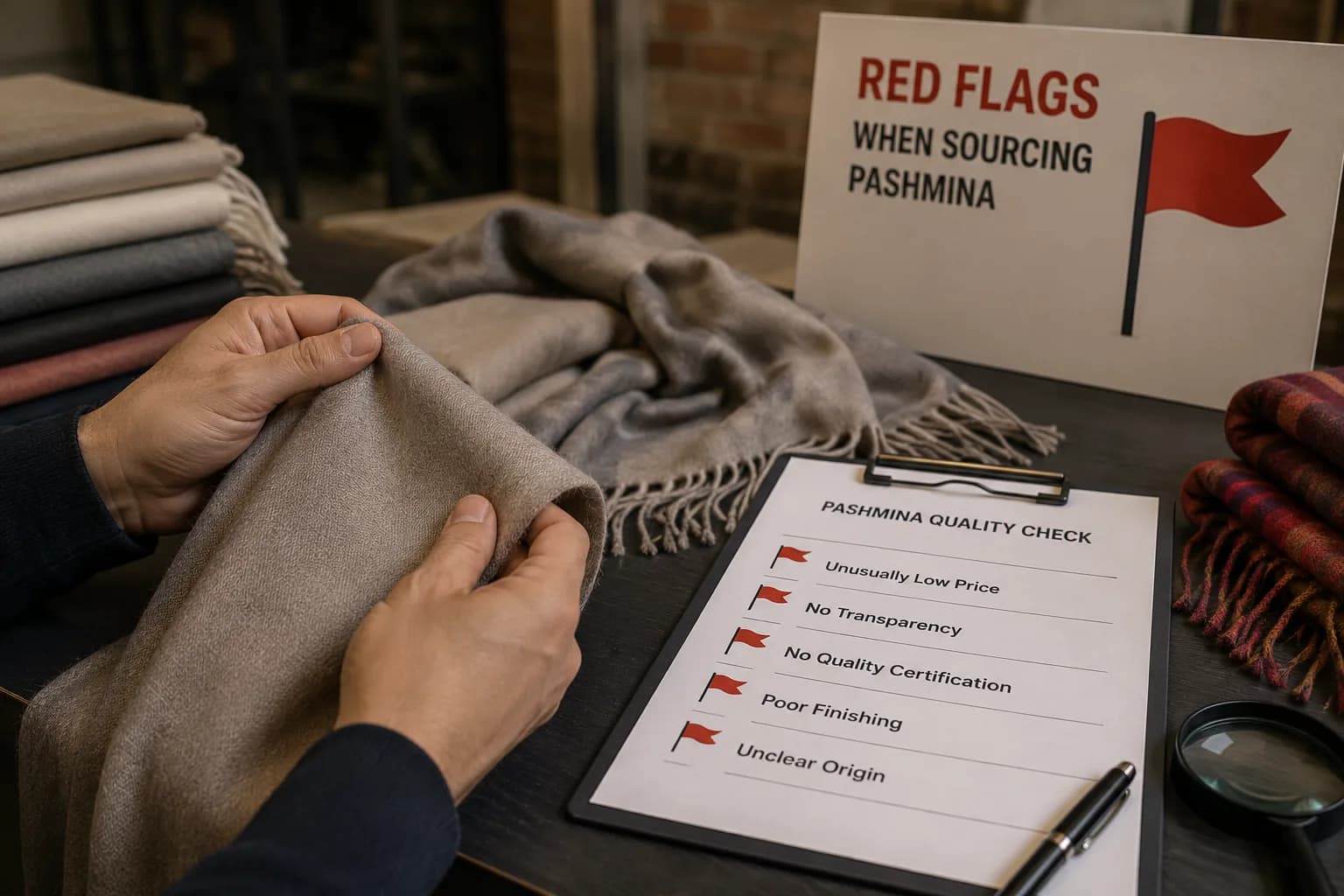
Pashmina is one of Nepal's most prized exports. It's also one of the most commonly misrepresented products out there. Too many international buyers find out the hard way that their cashmere order doesn't match what they paid for, whether that means the wrong fibre blend, incorrect weight, or poor finishing. For the full testing process behind each of these flags, read our pashmina authenticity guide. Here are five red flags to watch for.
The first red flag is fibre-blend misrepresentation. Real pashmina comes from chyangra, or mountain goat, cashmere, usually blended with silk for strength and shine. But some suppliers cut corners by substituting low-grade wool or acrylic. The only way to be sure is lab testing of pre-production samples. We can arrange independent fibre analysis before you commit to a bulk order.
The second red flag is inconsistent weight and thickness. Pashmina products have an expected weight range based on their dimensions and blend ratio. Variations of more than 10% between pieces in the same order indicate poor production control. We recommend specifying acceptable weight tolerance in your purchase agreement and having our inspectors weigh every piece during pre-shipment inspection.
The third red flag is poor dye quality and colour bleed. Nepal's pashmina dyers vary widely in skill and equipment quality. Low-quality dyes produce uneven colour, bleeding, or fading after the first wash. Our PSI includes a colour consistency check across the entire batch and a crocking test to assess dye fastness.
The fourth red flag is uneven weave or pilling. A tight, consistent weave is the hallmark of quality pashmina. Loose weave, visible gaps, or pilling after light abrasion indicate substandard workmanship or inferior yarn. These defects often appear uniform across a batch, meaning the entire production run may be affected.
The fifth red flag is missing or inaccurate labelling. Nepal customs requires specific labelling for pashmina exports, including fibre composition, country of origin, and care instructions. Mislabeling can result in seizure at destination ports or customs penalties. Always verify labelling against your import country's requirements before shipment.
To protect your order, require pre-production samples tested by an independent lab, specify acceptable tolerances in your purchase order, book a mid-production inspection to catch issues early, and always perform a PSI before shipment. Nepal Trade Solutions combines all these services into a single quality assurance package for pashmina buyers.
FREE DOWNLOAD
The Cashmere & Pashmina QC Manual
Our full inspection checklist, defect classification, AQL sampling plan, and testing protocols.
Tags