How to Evaluate a Carpet Factory in Kathmandu
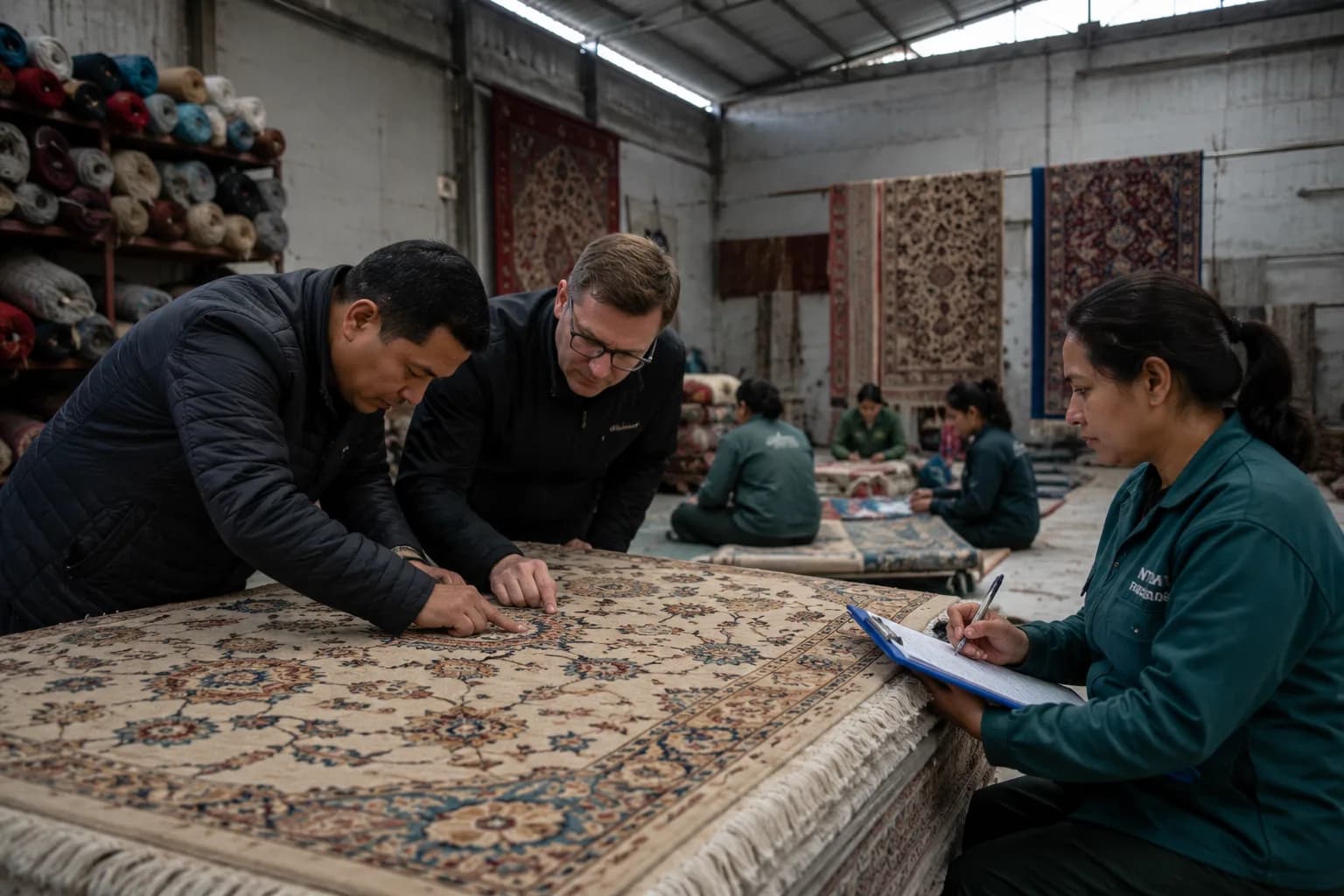
Kathmandu Valley is the heart of Nepal's hand-knotted carpet industry. Hundreds of workshops here produce wool and silk carpets bound for Europe, North America, and Asia. Factory quality varies massively, and a thorough audit before your first order can save you from expensive headaches down the road. If you are weighing Nepal against Indian manufacturers, this checklist still applies. Here is what to look for.
Start with the looms. How many are there, and what condition are they in? Hand-knotted carpet looms need to be sturdy and properly tensioned for the quality level you are after. Note how many weavers are actually working, and what size range the factory can handle. A workshop with 20 or more operational looms and a mix of formats usually has the capacity for consistent production.
Inspect the yarn storage area. Quality carpet factories store wool and silk yarn in clean, dry conditions away from direct sunlight. Check for consistent yarn thickness, colour uniformity across dye lots, and whether the factory spins its own yarn or purchases pre-spun material. Factories that spin in-house generally have better quality control over yarn consistency.
Visit the dyeing area. Modern Nepali carpet factories use either acid dyes for wool or metal-complex dyes. The dyeing area should be clean, well-ventilated, and equipped with temperature-controlled vats. Ask to see colour reference cards and test swatches from recent production runs. Inconsistent dyeing is one of the most common defects in Nepal carpets.
Observe the weavers at work. Experienced carpet weavers in Nepal can tie 6,000 to 12,000 knots per day depending on the knot density required. Check for proper lighting, ventilation, and ergonomic workstations. Factories with good working conditions retain skilled weavers longer, which results in more consistent quality over time.
Request the factory's export records for the past 12 months. A reliable factory should be able to show you bills of lading, customs documents, and buyer references. Ask about their largest regular orders and repeat buyer relationships. Factories that export consistently to reputable international brands are generally more reliable partners.
Nepal Trade Solutions conducts comprehensive factory audits that cover all these factors and more. Our audit reports include a factory capability score, certification verification, production capacity analysis, and detailed recommendations for engagement. We also offer periodic follow-up audits to ensure standards are maintained over time. Our Carpets & Rugs QC Manual lists the production checks an audit should verify.
FREE DOWNLOAD
The Carpets & Rugs QC Manual
Our full inspection checklist, defect classification, AQL sampling plan, and testing protocols.
Tags